The Ultimate Guide to Using Carbon Yarn for High-Performance
The Ultimate Guide to Using Carbon Yarn for High-Performance Anti-Static & ESD Clothing
Meta Description: Discover how carbon fiber yarn creates durable, wash-resistant anti-static clothing for electronics, cleanrooms, and hazardous areas. A guide for technical fabric and workwear manufacturers.
Body:
In environments where a single static spark can mean catastrophic product loss, a safety hazard, or a contamination event, standard workwear falls short. Surface-treated anti-static fabrics lose their efficacy with every wash. The answer lies in intrinsic, fiber-based conductivity—specifically, through the integration of carbon fiber yarn.
This guide is for technical designers, workwear manufacturers, and product developers seeking a permanent, reliable solution to static dissipation.
Why Carbon Yarn? The Science of Safe Dissipation
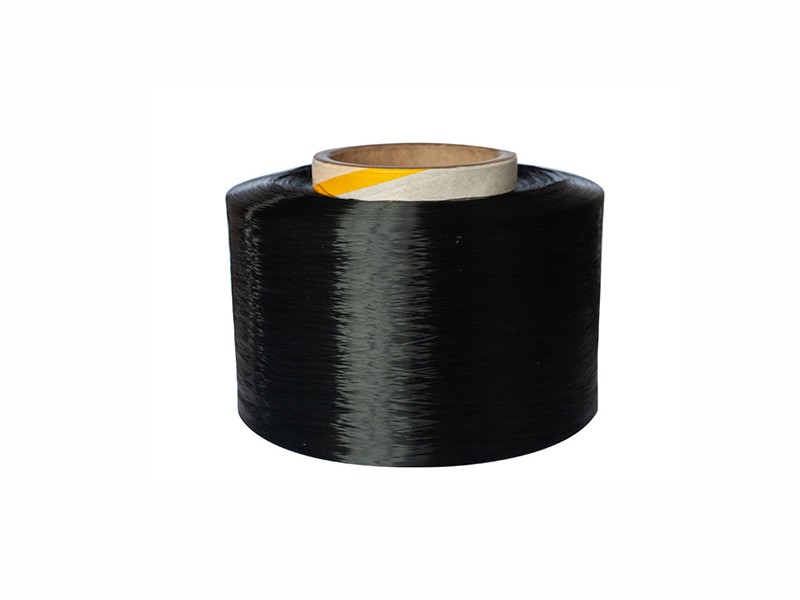
Carbon fibers are inherently conductive. When spun into a yarn and integrated into a textile structure, they form a permanent network of microscopic pathways. This network:
-
Captures static charges generated by movement and friction.
-
Distributes the charge evenly across the garment's conductive grid.
-
Safely dissipates it to ground (either through direct contact or via grounding snaps/straps), preventing dangerous accumulation.
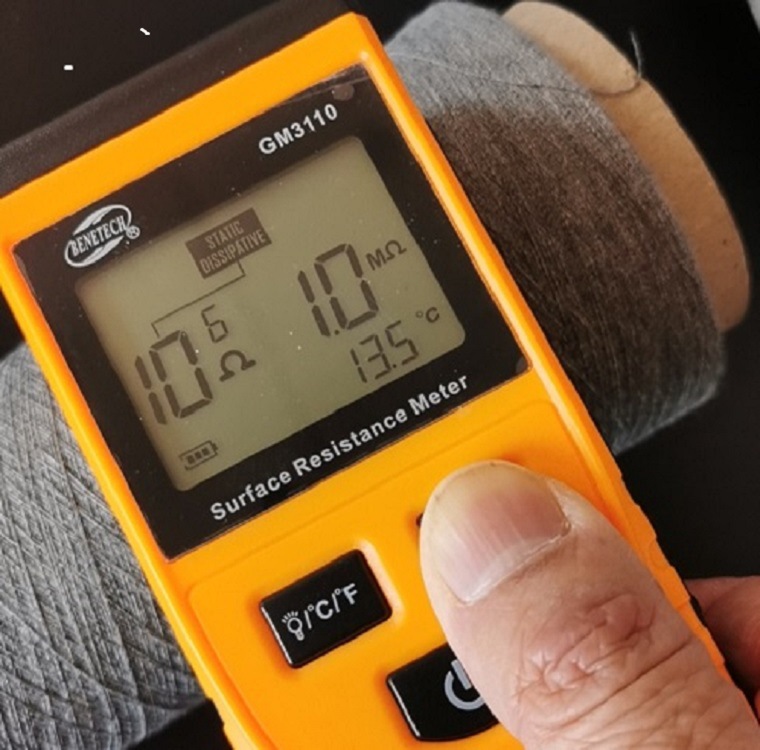
The result is a fabric with permanent, measurable surface resistivity (typically in the range of 10^5 to 10^9 Ω/sq), meeting key standards like IEC 61340-5-1 and ANSI/ESD S20.20.

Key Advantages Over Traditional Methods
| Feature | Surface-Coated Fabrics | Carbon Yarn-Integrated Fabrics |
|---|---|---|
| Durability | Wears off with abrasion & laundering | Permanent for garment life |
| Comfort | Can stiffen the hand feel | Lightweight, flexible, excellent drape |
| Reliability | Performance degrades over time | Consistent, predictable performance |
| Design Scope | Limited | Can be woven, knitted, or sewn in specific patterns/zones |
How to Specify and Use Carbon Yarn in Anti-Static Garments
-
Integration Methods:
-
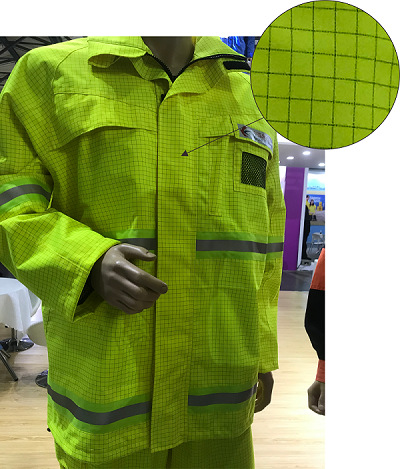
Weaving: Carbon yarns are integrated in the warp or weft direction, creating a conductive grid (e.g., every 5mm or 10mm). This is the most common and robust method.
-
Knitting: Used in finer gauges for comfort wear, carbon yarn can be plated or inlaid into the structure.
-
Sewing/Embroidery: Carbon yarn can be used in seams or as a discrete tracer thread to connect panels.
-
-
Grounding Connection: The conductive grid must be connected to a grounding point. This is typically done via:
-
A metal snap attached directly to the conductive thread network.
-
A woven conductive tape or cuff that contacts the skin or a grounding strap.
-
-
Fabric Compatibility: Carbon yarn is highly versatile and can be combined with:
-
Polyester: For durable, low-lint cleanroom garments.
-
Cotton or Cotton Blends: For comfort in general industrial ESD wear.
-
Aramid (e.g., Nomex®) or FR Modacrylic: For inherent static dissipation in flammable atmosphere protective clothing (ATEX/NFPA).
-
Target Applications and Market Opportunities
-
Electronics & Semiconductor Manufacturing: ESD smocks, coats, hairnets, and shoe covers to protect sensitive components.
-
Pharmaceutical & Biotech Cleanrooms: Prevents static attraction of particulate matter, protecting sterile processes.
-
Explosive Hazard Areas (Oil, Gas, Chemical): Integrated into FR/ARC clothing to dissipate static as a primary ignition source.
-
Aerospace & Automotive Assembly: Protects sensitive instrumentation and prevents fuel vapor ignition risks.
Partnering for Success: Questions for Your Yarn Supplier
When sourcing carbon yarn, ensure your supplier can answer these questions:
-
What is the linear resistance (Ω/cm) of the yarn?
-
Is it compatible with high-speed weaving/knitting equipment?
-
Can you provide technical data sheets and test reports (e.g., resistivity after multiple washes)?
-
Do you offer support in fabric development and prototyping?
Conclusion: Weaving Safety into the Core
In the next generation of technical workwear, safety features won't be added on—they'll be built in. Carbon fiber yarn represents a fundamental shift from temporary treatment to engineered material performance.
For workwear manufacturers, this is a chance to add significant value, improve product longevity, and win contracts in high-specification industries. The technology is proven, the materials are available, and the demand for true static-safe protection is only growing.
Ready to Innovate Your Product Line?
As a specialist supplier of conductive carbon yarns, we partner with fabric developers and manufacturers to create the next generation of anti-static PPE. Contact us today to discuss your application, request yarn samples, and explore how to integrate this durable solution into your designs.
Call to Action Button: [Request Technical Data Sheet & Samples] or [Contact Our Textile Engineering Team]
Tags: #CarbonYarn #AntiStaticFabric #ESDClothing #ConductiveYarn #TechnicalTextiles #WorkwearManufacturing #CleanroomApparel #ESDProtection #SmartFabrics #IndustrialSafety #StaticDissipative #CarbonFiber